
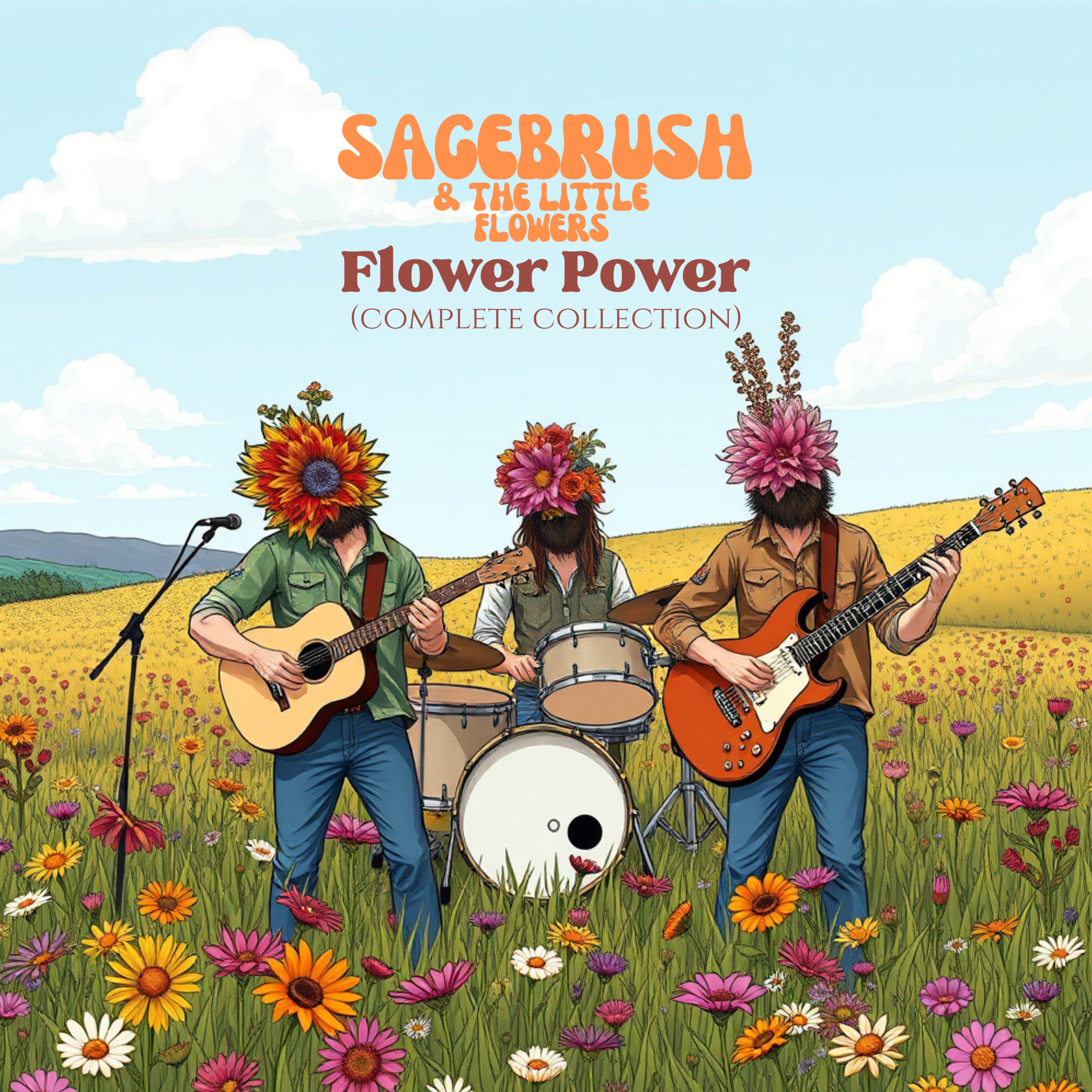
The name Sagebrush & The Little Flowers holds a whole landscape in a few words. Sagebrush survives in dry, exposed places. Little flowers arrive with color and vulnerability, often when the season seems least likely to make room for them. Together, they suggest the central tension of these songs: endurance without hardness, and hope without pretending the ground has always been easy.
This is Arizona-rooted folk, country, and Americana. The music draws on acoustic warmth, direct storytelling, and the sense of distance that belongs to the Southwest. Its setting matters, but the landscape is not a prop. Roads, weather, open space, and sudden bloom give shape to feelings that are recognizable far beyond Arizona.
Songs at human scale
A song does not need to announce a grand theory to say something lasting. Often it begins with a smaller observation: a relationship changing, a hard conversation finally spoken aloud, a stretch of road that gives someone enough quiet to hear what they have been avoiding.
Sagebrush & The Little Flowers belongs to that intimate tradition. The writing makes room for connection, uncertainty, resilience, and renewal. Country and folk are useful names for its roots; Americana describes the meeting point. None of those labels is more important than the voice of the song itself.
That is also why the arrangements should serve the feeling instead of crowding it. An acoustic texture can carry warmth. A pause can carry doubt. A melody can leave space for the listener's own memory. The result is music that invites attention without demanding that every moment be large.
The Southwest is more than scenery
Arizona contains more than one kind of landscape. Desert heat and higher-elevation air can belong to the same journey. Wide horizons can make a person feel free or very small, sometimes in the same afternoon. The project draws from that range rather than reducing the region to a single postcard image.
Its visual world follows the same instinct. Land, light, weather, and wildflowers appear alongside the music because they help describe its emotional scale. They are not substitutes for the songs. They are another way into them.
Listeners can begin with the official music catalog and follow the different releases at their own pace. The playlists offer alternate paths through that world, while the videos bring the songs into moving images.
Strength and tenderness can coexist
There is a familiar temptation to separate resilience from tenderness, as though surviving difficult ground requires a person to stop noticing beauty. Sagebrush & The Little Flowers makes a more generous proposition. The flower is not a denial of the harsh landscape. Its presence tells us that something can grow there.
That balance gives the artist's name its meaning and gives the music a place to return to. A song can be plainspoken without being simple. It can acknowledge loss without making loss the whole story. It can carry hope without promising an easy ending.
For a closer look at the project, visit the About page. For the newest recordings and their artwork, credits, and official listening destinations, explore the releases. This field-notes archive will continue to connect those songs to the ideas and places around them.
Start wherever you are. Follow a song. See what grows from there.